

Why Busy Cafés Are Still Closing — And What a $0 Instagram-Only Presence Really Costs
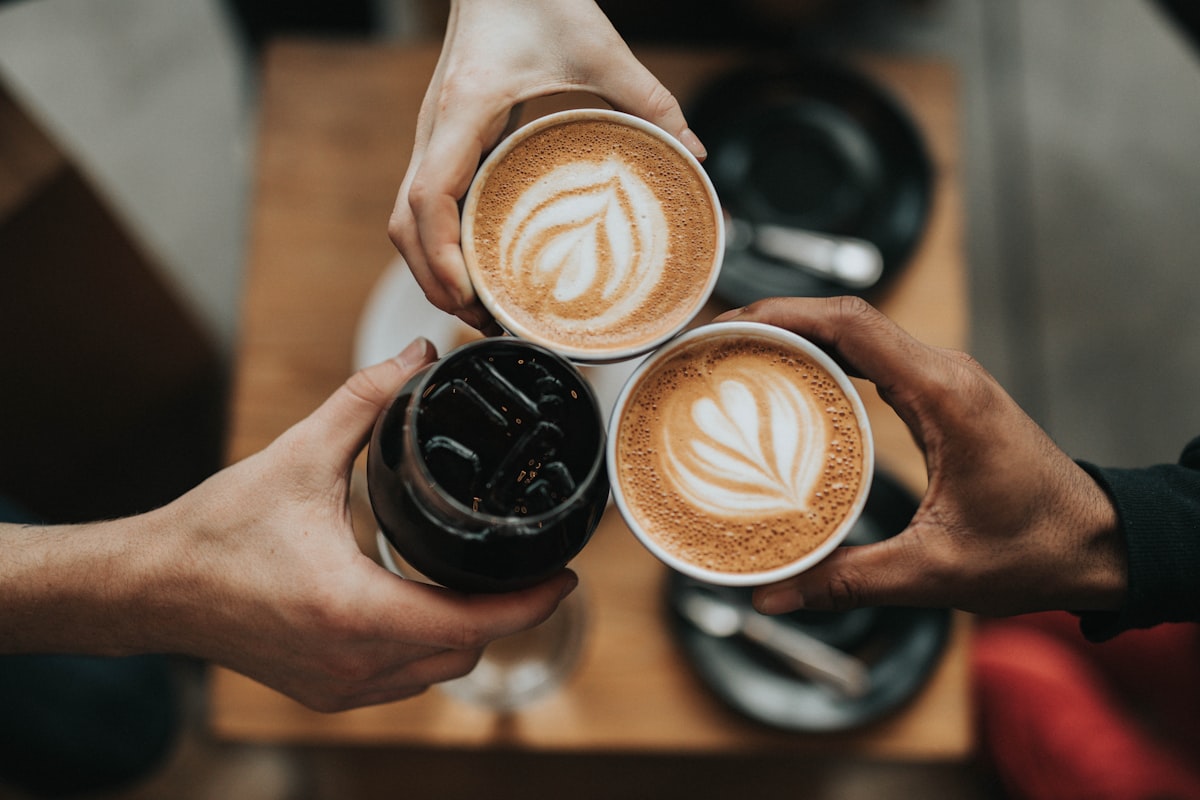
Walk down Smith Street in Collingwood on a Saturday morning and you’ll see queues out the door of the right café. Flat whites flying, avocado toast plated, vibes immaculate. The Instagram page? Pristine. Three thousand followers, beautiful latte art photos, a Story every second day.
Six months later, the shutters are up.
This is not a hypothetical. It is playing out across Melbourne, across every suburb from Fitzroy to Footscray, and it raises an uncomfortable question: if your café is busy, has a following, and makes good coffee — why is it still at risk?
The answer, more often than owners want to hear, is digital infrastructure. Specifically, the absence of it.
The Numbers Don’t Lie — Australia’s Hospitality Crisis in 2026
Australia’s food service sector is in serious trouble, and the data is unambiguous. Food service now carries the highest closure rate of any industry in the country at 10.4%, according to CreditorWatch. Accommodation and food insolvencies rose approximately 57% year-on-year — from 1,168 businesses in 2025 to 1,837 in 2026. These are not zombie businesses that were already half-dead. Many were trading well up until the month they folded.
The macro picture makes this worse. Discretionary consumer spending growth is forecast to slow dramatically — from 2.5% down to just 0.7% in 2026. Price-sensitive diners are not loyal to ambience or Instagram aesthetics when every dollar is being scrutinised. They are typing “best coffee near me” into Google, clicking the first three results, checking reviews, and making a decision in under 90 seconds.
Meanwhile, Xero’s small business data shows cafés and restaurants recorded the softest revenue growth of any tracked sector — just 3.3% year-on-year in the March quarter, against an overall small business average of 7.2%. The gap is widening, not narrowing.
What separates the cafés that survive from the ones that close is often not the quality of the product. It is whether customers can find them at all.
The Instagram Trap: What Happens When the Algorithm Changes
Instagram is a marketing channel. It is not a business asset. That distinction is critical, and most small hospitality operators have not fully internalised it.
In January 2026, Instagram went down for approximately six hours. For businesses that relied on it as their sole online storefront — no website, no Google Business Profile, no bookings system — that outage meant being effectively invisible for an entire trading day. No one could check the menu. No one could find the address. No one could book a table. Six hours of downtime with zero contingency.
But downtime is the dramatic version of a quieter, more persistent problem. Instagram’s algorithm is a private system operated by a private company, and it changes without warning and without accountability to your business. Organic reach for business accounts has declined year after year. A post that reached 600 people eighteen months ago now reaches 200. A Reel that went semi-viral and brought in a queue last autumn is buried today.
Picture a café in Fitzroy — let’s call it Birch & Lane. Great product, loyal regulars, 4,200 followers. They rely entirely on Instagram to communicate with new customers. When Meta shifted its algorithm to prioritise Reels and paid content in early 2026, Birch & Lane’s organic reach dropped 40% in a single month. Enquiries fell. New foot traffic stalled. The regulars kept coming — but regulars alone do not sustain a café. They never did.
The owner had no email list, no website, no Google ranking. There was nowhere to redirect that lost reach. The platform they had spent years building an audience on had changed the rules, and they had no fallback.
This is the Instagram trap. You do not own your audience. You are renting attention on someone else’s platform, and the landlord can change the lease at any time. Which is why the case for owning the layer you actually control keeps getting stronger.
What Customers Actually Do Before Visiting a Café (The Discovery Journey)
Here is what the research tells us about how Australians actually find and choose a local café in 2026.
Two-thirds of Australians will not consider a business they cannot find online. Not a “hard to find” business — a business that simply does not appear in a standard search. If you are not on Google, you do not exist for a meaningful portion of your potential customers.
The discovery journey typically looks like this: a person is in a suburb they do not know well, or they are deliberately looking for somewhere new. They open Google Maps or type “[suburb] café” into Google. The Google Maps 3-pack — the top three local results — captures 40 to 50% of all local search clicks. If your café is not in that 3-pack, you are invisible to half the people actively looking for exactly what you offer, right now, in your area.
Then they check reviews. 97% of consumers read local reviews before visiting a business. A café with 12 reviews from 2023 and no responses from the owner reads as neglected. A café with 80 reviews, regularly updated photos, a current menu, and owner responses to every review reads as professional and trustworthy. 80% of consumers say they prefer businesses that respond to every review.
None of this is possible with an Instagram account alone. Instagram does not feed Google Maps. Instagram posts do not appear in Google search results for “[suburb] café”. Instagram followers cannot leave a Google review. These are entirely separate systems, and optimising one does nothing for the other.
A complete Google Business Profile — which only 47% of Australian small businesses have fully set up — combined with a website that loads fast, shows a current menu, and contains a booking widget, is what gets a café into that 3-pack. That is the difference between being found and being invisible.
The $0 Online Presence: Calculating the Real Monthly Cost of No Website
The reasoning behind going Instagram-only is almost always financial. It is the same reasoning that leaves most Australian small businesses with no website at all. A website costs money. Instagram is free. Therefore Instagram is the sensible choice for a café operating on thin margins.
This logic collapses when you run the actual numbers.
Assume a café in Collingwood has an average transaction value of $22. It seats 30 people and turns over two sittings on weekdays, three on weekends. A conservative estimate puts it at 300 covers per week, or roughly 1,300 per month.
Now apply the discovery gap. Two-thirds of potential new customers will not consider a business they cannot find online. Of the people who do find it via Instagram, a significant portion — particularly over-35s, who represent a large and high-value dining demographic — will still search for a website before committing to a visit. If the website does not exist, research suggests a meaningful percentage of those prospects choose a competitor who does have one.
Conservative estimate: 8 to 12% of potential new customers per month choose a different café because Birch & Lane has no website and cannot be found on Google. At 1,300 covers a month at $22 average spend, that is between $2,288 and $3,432 in lost revenue every single month. Not because the coffee is bad. Because the customer could not find them.
A professional website with Google Maps integration, an online menu, a booking widget, and SEO optimisation costs from $199 per month with LeonovDesign’s subscription model — with no upfront cost and a build time of one to four weeks. The return on that investment, in recovered and newly captured revenue, is measurable within the first trading month.
The “$0 presence” costs far more than any website ever would. The cost is just invisible — it shows up as customers who never arrived, rather than as a line item on an invoice.
What Café Websites Actually Do (Menu, Maps, Bookings, Reviews)
A well-built café website is not a brochure. It is operational infrastructure that works around the clock to bring customers through the door.
Menu visibility. A current, readable menu on your website — not a JPEG buried three posts back on Instagram — answers the single most common pre-visit question. “What do they serve? Do they have something for my dietary requirements?” A customer who can answer that question confidently is far more likely to visit. A customer who cannot will go somewhere that answers it.
Google Maps integration. A website with correctly structured local SEO signals — your suburb, your trading hours, your service type — feeds into Google’s local search algorithm. Combined with a fully optimised Google Business Profile, it is what gets you into the 3-pack for searches like “best café Fitzroy” or “coffee and breakfast Collingwood”. This is organic, evergreen, compounding traffic. It does not disappear when an algorithm changes.
Bookings widget. For cafés that take bookings for larger groups or weekend sittings, an embedded booking widget converts intent directly into confirmed revenue. A customer who can book at 10pm on a Tuesday — without having to DM you on Instagram and wait for a response — is a customer who has committed. Removing friction at the point of decision is one of the highest-leverage things a website can do.
Review management. A website with links to your Google reviews, and an owner who responds to every review, signals professionalism and care. It also feeds directly into your local search ranking. Reviews are not just social proof — they are a ranking factor.
The businesses in Melbourne that are growing their foot traffic in a contracting market are not doing anything exotic. They are simply making it easy to be found, easy to understand, and easy to book. A website is the infrastructure that makes all three possible.
Frequently Asked Questions
My café already has 4,000 Instagram followers. Why do I need a website?
Because your followers cannot help a new customer find you on Google. Instagram and Google are entirely separate systems. Someone searching “café near Collingwood station” will never see your Instagram page — they will see Google Maps results, and those results are determined by your website and Google Business Profile, not your social following. Your existing audience is valuable, but it does not capture the much larger pool of people who have never heard of you and are actively searching right now.
Isn’t building a website expensive for a small café?
It does not have to be. LeonovDesign’s subscription model starts at $199 per month with no upfront cost and typically delivers a live, conversion-focused website within one to four weeks. The more relevant question is what the absence of a website is costing you in lost bookings and undiscoverable searches — a number that, for most cafés, far exceeds the monthly subscription cost.
What if Instagram goes down or changes its algorithm again?
That is exactly the risk this article addresses. In January 2026, Instagram’s six-hour outage left thousands of businesses with no online storefront at all. Algorithm changes that reduce organic reach by 30 to 40% happen multiple times per year. A website you own and control is immune to both. You cannot be shadowbanned, algorithmically deprioritised, or made invisible by a policy change at Meta.
How quickly could a website actually make a difference for a café?
Based on LeonovDesign’s work with Melbourne small businesses, meaningful results typically emerge within the first two to three months. Keilor Park Soccer Club saw a 280% increase in traffic and a 38% revenue lift within 2.5 months. DreamEnglish achieved 320% traffic growth within seven months. For a café with clear local SEO signals — suburb, trading hours, menu — the timeline to appearing in Google’s local 3-pack is typically faster than most owners expect.
The Decision Is Actually Simple
The hospitality industry is under real pressure in 2026. Costs are up, consumer spending is softening, and the closure rate is the highest of any sector in Australia. In that environment, every competitive advantage matters and every unnecessary risk is a liability.
Running on Instagram alone is an unnecessary risk. It hands control of your discoverability to a private algorithm you cannot influence. It makes you invisible to the majority of customers who search on Google. It gives you no fallback when the platform goes down.
A website — properly built, locally optimised, with a menu, a map, and a booking widget — is not a luxury for a Melbourne café. It is the baseline infrastructure required to compete in a market where the price-sensitive diner has five alternatives within walking distance and will choose the one they can find and understand most easily.
If you are running a café, restaurant, or any hospitality business in Melbourne and your digital presence stops at Instagram, the cost of that decision is being paid every single month. It just does not appear on any invoice.
LeonovDesign builds conversion-focused websites for Melbourne small businesses — $199/month, no upfront cost, live in 1–4 weeks.
Get in touch today at leonovdesign.com/contact/ or message directly on WhatsApp: +61 434 179 988.